
Why You Feel Everything More During Retrograde Season: A Guide for Empaths and Highly Sensitive Women
So let me tell you what I have been hearing a lot lately in my practice. Variations of this: "I do not know why I feel so heavy right now. I know nothing is actually wrong in my life. I know I should not feel this anxious or this sad. But here I am."
If that sounds familiar, let's talk about what might actually be going on.
What retrograde season actually does to a sensitive nervous system
First, a quick middle-ground explanation for those of you who are somewhat familiar with astrology but do not consider yourselves experts. A planet in retrograde is not actually moving backward. It is an optical illusion based on the relative movement of Earth and that planet in their orbits. But what astrology teaches, and what many of my clients experience viscerally, is that retrograde periods tend to bring a slowing down, an inward pull, and a stirring up of energy that was already present beneath the surface.
Part of the Woo-Fluent™ Series: When the planets shift, sensitive nervous systems feel it first. Here is what is actually happening and what to do about it.
Hi, I am Laura Zane, a licensed therapist and the creator of the Woo-Fluent™ framework at Sage Synergy Counseling and Wellness. I work with highly sensitive, neurodivergent, and empathic women throughout Florida who feel things deeply and are done pretending they do not. I am also someone who takes planetary energy seriously. Not as a replacement for clinical thinking, but as a real and valid layer of the human experience that most therapists will not talk about with you. I will.
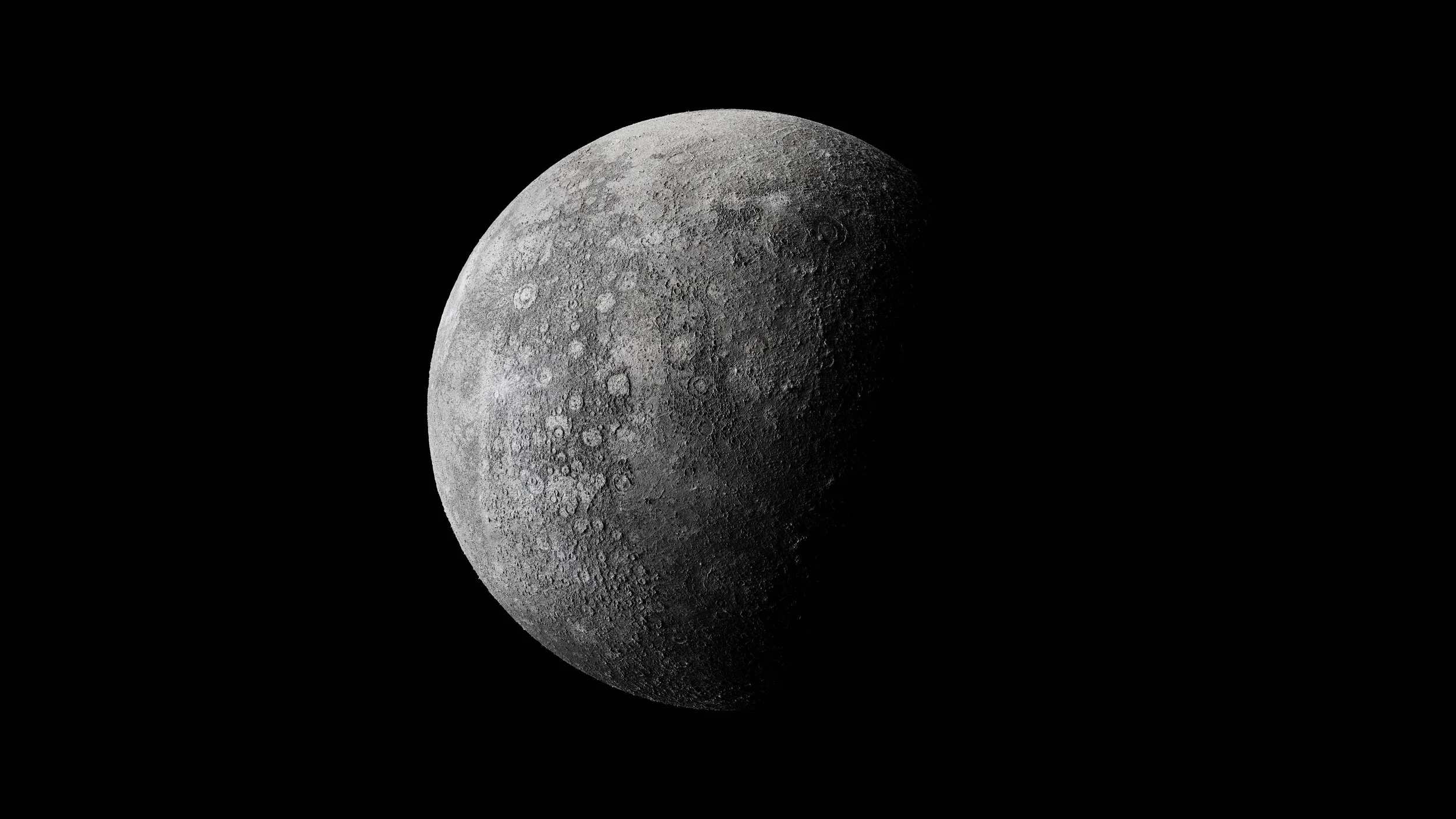
Photo by: Am on Unsplash
So let me tell you what I have been hearing a lot lately in my practice. Variations of this: "I do not know why I feel so heavy right now. I know nothing is actually wrong in my life. I know I should not feel this anxious or this sad. But here I am." And that is something that comes up every single retrograde cycle, like clockwork. If that sounds familiar, let's talk about what might actually be going on.
What retrograde season actually does to a sensitive nervous system
First, a quick middle-ground explanation for those of you who are somewhat familiar with astrology but do not consider yourselves experts. A planet in retrograde is not actually moving backward. It is an optical illusion based on the relative movement of Earth and that planet in their orbits. But what astrology teaches, and what many of my clients experience viscerally, is that retrograde periods tend to bring a slowing down, an inward pull, and a stirring up of energy that was already present beneath the surface.
When multiple planets are in retrograde at the same time, that amplification compounds. For most people this might look like technology glitches, miscommunications, or a general sense of things feeling off. For empaths and highly sensitive people it can feel like a full nervous system overload. The emotional volume of everything gets turned way up.
"Just because you are feeling it does not mean it is yours. And just because the timing feels cosmic does not mean you are making it up."
Here is what I want you to understand clinically and cosmically. Your nervous system as a highly sensitive or empathic person is already processing more information than the average person. You absorb the emotional states of people around you. You pick up on the energy in a room before anyone has said a word. You feel the collective weight of what is happening in your community, your news feed, your environment. That is not metaphor. That is how your system works.
When retrograde energy amplifies the collective field, your already-sensitive system absorbs more of it. The sadness you are feeling may not be about your life at all. It may be the grief of your community, the anxiety of the people closest to you, or the energetic weight of something much larger than your personal circumstances. That is real. And it deserves to be taken seriously.
Your environment is part of your emotional landscape too
This is something I talk about with my Florida clients especially. We live in a state where environmental issues like red tide, algae blooms, and water quality concerns are not just news stories. They are felt. If you are a sensitive person who loves the water, who feels connected to the natural world, and who picks up on collective distress, local environmental suffering lands in your body differently than it does for others.
This is not weakness. This is your nervous system doing exactly what it is built to do. The challenge is learning to acknowledge what you are absorbing without drowning in it. Feeling the weight of the world is part of being wired the way you are. Carrying it as if it is all yours to fix is where it becomes unsustainable.
How to tell what is yours and what belongs to the collective
This is the most important practice I teach empaths and highly sensitive people, and retrograde season is when it matters most. Mindfulness gives us a way to pause, observe, and get curious about our experience rather than just being swept away by it.
The retrograde check-in practice
Pause before you personalize. When a heavy feeling arrives, especially one without a clear source, stop before you start writing a story about what it means about your life. Ask first: was I feeling this before I opened social media, before I talked to that person, before I read that news story?
Do a personal inventory. Is there something actually happening in my own life right now that would explain this feeling? If you genuinely cannot find the source in your own circumstances, the feeling may belong to the collective field, not to your personal story.
Ground yourself physically. Feel your feet on the floor. Put your hands on your belly. Take three slow breaths. Grounding brings you back into your own body and helps you separate your emotional baseline from what you have absorbed from outside yourself.
Limit your energetic intake. During heavy retrograde seasons, this is not the time to scroll endlessly, have the big hard conversations, or take on everyone else's problems. Protect your field intentionally. This is not avoidance. It is nervous system hygiene.
Do what is yours to do and release the rest. You do not have to fix the world. Figure out what is actually in your power, your small sphere of influence, and put your energy there. Sign the petition. Show up for the friend. Rest so you have something to give tomorrow. Then consciously release what is not yours to carry.
You are an analyzer by nature. Retrograde amplifies that too.
One of the hallmarks of being highly sensitive or neurodivergent is a tendency toward deep analysis. You do not just feel things, you think about why you feel them, what they mean, what you should do about them, and what it says about you that you feel them at all. During retrograde season this analytical loop can go into overdrive.
Mindfulness is not about stopping the analysis. It is about creating a little bit of space between the feeling and the story you are building around it. When you can observe your own process with some curiosity rather than getting completely consumed by it, you reclaim your ability to choose how to respond rather than just react.
That space is where your clarity lives. And it is accessible to you even when the planetary energy is heavy and the collective field is loud.
You cannot save the world. That is actually okay.
Empaths and highly sensitive people tend to feel responsible for everything. The suffering in the news. The struggling friend. The state of the waterways. The collective grief of an entire community during a difficult season. When you feel it all so deeply it is natural to want to fix it all.
But here is what I come back to with my clients again and again. Even the smallest action taken with intention creates a ripple effect. You do not have to carry all of it to matter. You just have to show up for the piece that is genuinely yours. Maybe that is signing a petition. Maybe it is making sure you get enough sleep so you have something to give the people who need you most. Maybe it is recognizing that right now your job is to take care of yourself, and that is enough.
The idea that start local and affect global is not a consolation prize. It is actually how change works. And it is how sustainable, sensitive people stay in the game long term rather than burning out completely by trying to hold everything at once.
Frequently asked questions
Is it really possible that planetary retrograde affects how I feel emotionally?
From a clinical perspective, I can tell you that collective energy is real. When large numbers of people are experiencing heightened anxiety, grief, or overwhelm simultaneously, that collective state ripples through social networks, media, and direct human contact in ways that affect all of us. For highly sensitive people and empaths who are already wired to absorb the emotional states of others, those collective shifts land harder and faster. Whether you attribute that to planetary influence, collective consciousness, or pure nervous system sensitivity, the experience is valid and the tools for managing it are the same.
Why does Mercury retrograde seem to hit me harder than other people?
Mercury retrograde is associated with communication, technology, and mental processing. For neurodivergent and highly sensitive people whose nervous systems are already working overtime to process information, a period that energetically amplifies those same areas can feel particularly destabilizing. You are not imagining it. Your system is just more finely tuned to those frequencies than the average person.
How do I protect my energy during heavy astrological seasons without becoming isolated?
The goal is not to disconnect from the world. It is to engage with it more intentionally. During heavy seasons that means being selective about what you consume and when, building in more grounding and recovery time than usual, choosing your social interactions with more care, and having a daily practice that brings you back to your own baseline. You can stay connected and protective at the same time. It just requires more intentionality than it does during easier seasons.
I identify as an intuitive or empath but I also have ADHD. Does that make retrograde season harder?
Often yes. ADHD nervous systems already struggle with emotional regulation, rejection sensitivity, and the ability to filter out what is not immediately relevant. Add the amplified collective energy of a retrograde period on top of a system that is already processing a lot, and the overwhelm can feel really significant. Working with a therapist who understands both the neurodivergent experience and the empathic or intuitive experience makes a real difference during these seasons.
Is it okay to take a break from the news and social media during retrograde?
Not only is it okay, for many highly sensitive and empathic people it is genuinely necessary. There is nothing spiritually or ethically wrong with protecting your nervous system during a heavy season. Staying informed does not require you to be continuously immersed in distressing content. You can care deeply about the world and still give yourself permission to step back and recharge. In fact for sensitive people, rest is often how you build the capacity to keep showing up.
How is what you do different from seeing a regular therapist?
I bring two decades of clinical training and licensure alongside a genuine, lived understanding of what it means to be highly sensitive, neurodivergent, and spiritually aware. I am not going to pathologize your intuitive gifts, dismiss your experience of collective energy, or ask you to leave your spiritual framework at the door. I call this being Woo-Fluent™. It means I speak both languages, clinical and cosmic, and I will not make you choose between them in our work together.
Ready to stop white-knuckling your way through every heavy season?
If you are a highly sensitive, neurodivergent, or empathic woman in Florida who is tired of feeling everything and not knowing what to do with it, I would love to work with you. Through online therapy we can build the grounding practices, energetic boundaries, and self-awareness that let you stay connected to the world without drowning in it. Bring a willing heart. I will bring the tea.
Does this resonate, but therapy is not what you are looking for right now?
There is an important distinction between therapy and spiritual coaching, and both are valid paths depending on where you are. If you are looking for spiritual guidance, empath support, or intuitive coaching rather than clinical mental health treatment, that work lives at Coaching for Empaths. Visit the link below to learn more about how we can work together outside the therapy room.

Burnout in Highly Sensitive Women: Motherhood, Homeschooling, and Learning to Choose Less
Burnout is real, and when you throw motherhood into the mix, it’s a whole new level of chaos. Let me take you on my journey through it. 😅
It all started after grad school, just after I’d bought a house and thought I was doing everything right. I went to my doctor, (who was used to seeing me every few weeks because I was constantly sick. I didn’t realize at the time my body was trying to tell me to rest, take it down a notch. I blamed it on a bad immune system and working with kids.) Anyway, there I was, sitting in my doctor’s office, tears streaming down my face. He asked, “What’s wrong?” and all I could say was, “I don’t know! Everything in my life is good—I just graduated, bought a house, life is great.” He looked at me, nodded, and reached for his prescription pad, saying,”You don’t have to feel this way, I can help.” Desperate, I nodded in agreement.
Burnout often shows up differently in highly sensitive or neurodivergent women, especially during seasons like motherhood and homeschooling.
Burnout: My Journey to Less

Burnout is real (even when your life looks good on paper)
Burnout can show up differently in highly sensitive and neurodivergent women, especially during seasons of motherhood and when you have school aged children, especially if you decide to homeschool. What looked like anxiety or exhaustion in my life was actually a nervous system asking for a different pace, a different rhythm, and a different way of living. It took me years to realize that what I thought was anxiety or depression was actually burnout in a highly sensitive nervous system.
Burnout often looks different in highly sensitive or neurodivergent women. Instead of obvious collapse, it can look like constant exhaustion, frequent illness, feeling overwhelmed by everyday tasks, or wondering why everyone else seems able to handle more. Many women who later discover they are highly sensitive, ADHD, autistic, or AuDHD spend years believing they are simply “too much” or “not resilient enough,” when in reality their nervous systems are processing far more than most people realize
Why this matters: Burnout is real, and when you throw motherhood into the mix, it’s a whole new level of chaos. Let me take you on my journey through it. 😅
It all started after grad school, just after I’d bought a house and thought I was doing everything *right.* I went to my doctor, (who was used to seeing me every few weeks because I was constantly sick. I didn’t realize at the time my body was trying to tell me to rest, take it down a notch. I blamed it on a bad immune system and working with kids.) Anyway, there I was, sitting in my doctor’s office, tears streaming down my face. He asked, “What’s wrong?” and all I could say was, “I don’t know! Everything in my life is good—I just graduated, bought a house, life is great.” He looked at me, nodded, and reached for his prescription pad, saying,”You don’t have to feel this way, I can help.” Desperate, I nodded in agreement.
When Burnout looks like anxiety or depression
The meds helped… for a while. But deep down, I knew it wasn’t just depression, it wasn’t just anxiety. I didn’t know what it was at the time, I just knew that getting through the day was a task. I worked, and slept. 🙃 I had drained my energy reserves trying to juggle grad school, two jobs, and all the demands life threw at me. My plate was way too full, and I had no idea how to pace myself.
I mean, you’d think being a therapist, I’d understand burnout, right? But nope—I was too busy trying to be Do The Things… and wondering why I kept crashing into walls. It turns out that knowing all the theory doesn’t help when you’re busy ignoring the giant flashing “Warning: You’re Burning Out!” signs in your own life. 🤦♀️
Learning that Self-Care is more than bubble baths
Eventually, I did what any overwhelmed human would do—I started taking things off my plate. *Fast.* I learned to set boundaries and redefine self-care. And spoiler alert: self-care is way more than bubble baths and eating healthy. 🛁🌿 I needed real rest—more sleep, time to play, and moments to just *be.* I needed fewer commitments, fewer expectations, and more time outdoors.
Motherhood and the Return of Overwhelm
Gradually, I got better. And then… I became a mom. 👶 Just like that, the to-do lists multiplied overnight. The self-care strategies that had worked so well before? Out the window. Now, it was crying babies, endless time commitments, and the exhaustion of keeping a tiny humans alive while trying to survive myself. The overwhelm was back, and I had to adjust—again.
So, I shifted gears. Soulful art became finger painting in the bathtub. 🎨 My quiet time morphed from Enya and candles to cuddles and Baby Mozart. 🍼 Priorities changed. The clean house? Less important. Being present? The new goal. I found moments where I could sink my feet into the grass while keeping my toddlers contained. I adjusted, and it worked… for a while.
But as my kids grew, so did the commitments—extracurriculars, school, work deadlines. It was all *too much.* And in the midst of this chaos, I decided to open my own business. This may seem counter-intuitive but I was tired. My thought was if I am dumping all this time into someone else’s vision, why not do it for myself, my way. I needed more control, I needed to do things on my terms. This was a game-changer, giving me a chance to create a schedule that worked for me, to slow down the grind while still supporting my family.
Discovering I was a Highly Sensitive Person and why burnout suddenly made sense
Then, by chance, by happenstance, through synchronicty, I am not sure how I got there honestly, but I came across the term Highly Sensitive by Elaine Aron. Insert deep dive here, and I realized I was highly sensitive. Trying to keep up with “normies” (no offense, normies, I love you) was just not in the cards for me. I couldn't compare my schedule to others. I had to accept that I was wired differently, that my energy had limits, and that burning myself out trying to meet everyone else's expectations was never going to work. I needed to play by my own rules.
But burnout? It’s a sneaky beast. Some mornings, even getting out of bed felt impossible. Staying awake past my kids’ bedtime? Forget about it. I often fell asleep moments after tucking them in, sometimes even in their beds. If I tried pushing past and staying up late, my body reminded me to rest by getting sick and forcing me back to bed.
My self-care was pretty good. Monthly acupuncture, Check. Good sleep, Check. Eating healthy, Check. Leaning into others, still a struggle. Making sure I set boundaries, Check. However, the drowning feeling was still there. I was managing, but not living fully.
The Unexpected Nervous System Reset
Then came COVID. Our lives, like everyone else’s, turned upside down. The kids came home, and I shifted to doing virtual therapy. I closed my physical office—a space I had poured my heart into creating—and with a heavy heart, I re-evaluated *everything.* When the next school year came, I decided to homeschool. It started as a practical decision because of the pandemic, but it turned out to be an unexpected gift. 🌟
Gone were the daily battles over time, the morning rushes, the “GET YOUR SHOES ON NOW!” meltdowns. We traded those for schoolwork done in pajamas, laundry tossed in between clients, and well-rested kids who no longer had to face after-school homework wars.
For my family, the pandemic, despite all its hardships, actually reduced our stress. And as the world started to return to “normal,” I realized I didn't want to go back. I didn't want the chaos, the frantic pace, the burnout.
Choosing a Slower Life
So, we chose *less*. Not as some radical act of rebellion, but as a conscious choice for calm and sanity. In all that hustle, I hadn't even realized my boys were feeling burned out too. Most of our conflicts came from being bone-tired or being hungry and not being able to get food on the table fast enough. We were done with the fast-paced, on-demand lifestyle. We needed a slower rhythm, more time to recover. ❤️
Now, four years into homeschooling, we sleep more than most families. We have less structure. We have one or two activities, and social events are maybe once a week. Our house? Still not always clean. Often, we're home together but each in our own space, doing our own thing. Our time still includes cuddles on the couch, game nights, and things that are slower paced.
Like all moms, I worry whether I'm doing things right. Will my kids be stereotyped as "awkward homeschoolers"? Am I harming them by not making their childhood more demanding? Honestly, I don't have the answers to those questions yet. What I do know is that I've been able to preserve my sanity. I don't fight with my kids as much, and our time as a family is peaceful. Maybe I can send them into the world without their nervous systems being on fire, without starting adulthood already burned out. If that's the case, I'll take the awkwardness. 🙂
Many of the women I work with are highly sensitive, neurodivergent, creative, or homeschooling parents who have spent years trying to function at a pace that simply doesn’t fit their nervous system. Therapy can help you understand your wiring, reduce burnout, and build a life that supports your energy instead of constantly draining it.
By choosing less, I found more—more time, more peace, more connection. Maybe you can too! Sometimes, the best decision is the one that lets you just *breathe*.
If this story resonates with you it could be because…
• You’re a highly sensitive woman who feels overwhelmed by the pace of modern life
• You suspect you may be neurodivergent (ADHD, autistic, or AuDHD) but were never recognized growing up
• You’re a thoughtful, creative, or intuitive person who absorbs the emotions and needs of everyone around you
• You’re a homeschooling or alternative-education parent trying to create a calmer life for your family
• You’re capable, insightful, and responsible… but constantly exhausted
If you think you are ready to start therapy, schedule a free consult.
Questions Highly Sensitive and Neurodivergent Women Often Ask
Why do highly sensitive women burn out more easily?
Highly sensitive nervous systems process more emotional and sensory input, which can lead to faster exhaustion when life becomes overwhelming.
Can burnout look like anxiety or depression?
Yes. Burnout can show up as exhaustion, irritability, frequent illness, emotional overwhelm, or feeling like even simple tasks require enormous effort.
Can therapy help highly sensitive or neurodivergent women with burnout?
Therapy can help you understand how your nervous system works, develop boundaries that protect your energy, and create a life rhythm that supports rather than overwhelms you.
With love and healing,
Laura 💖