Guided Meditation For Healing
"🌲🌿 Embark on a healing journey through this serene forest path. Imagine yourself walking along a peaceful trail surrounded by lush, vibrant greenery. The soothing sounds of rustling leaves and chirping birds envelop you. 🐦🍃
In our guided meditation, we'll draw upon the wisdom of this tranquil forest to help you navigate and alleviate pain and ailments. 🌳✨ Join us on a transformative experience, and explore how nature therapy in sunny Florida can support your wellness journey. ☀️🌴
#GuidedMeditation #HealingJourney #PainRelief #NatureTherapy #FloridaTherapy"
An 11 Minute Guided Mindfulness Visualization for Healing

Riding the Tides: How to Navigate Life's Peaks and Valleys
We all have peaks and valleys. That part is normal.
We all have them. Those seasons of life when things feel heavy, slow, or stuck. Whether it is a dip in finances, a rough patch in a relationship, or just a quiet erosion of the energy and enthusiasm you usually carry, highs and lows are woven into every human experience. And yet, when we find ourselves deep in a valley, it can feel profoundly isolating. Like something has gone fundamentally wrong. Like we have somehow failed at the business of living.
But what if you have not failed at all? What if you are simply experiencing low tide?
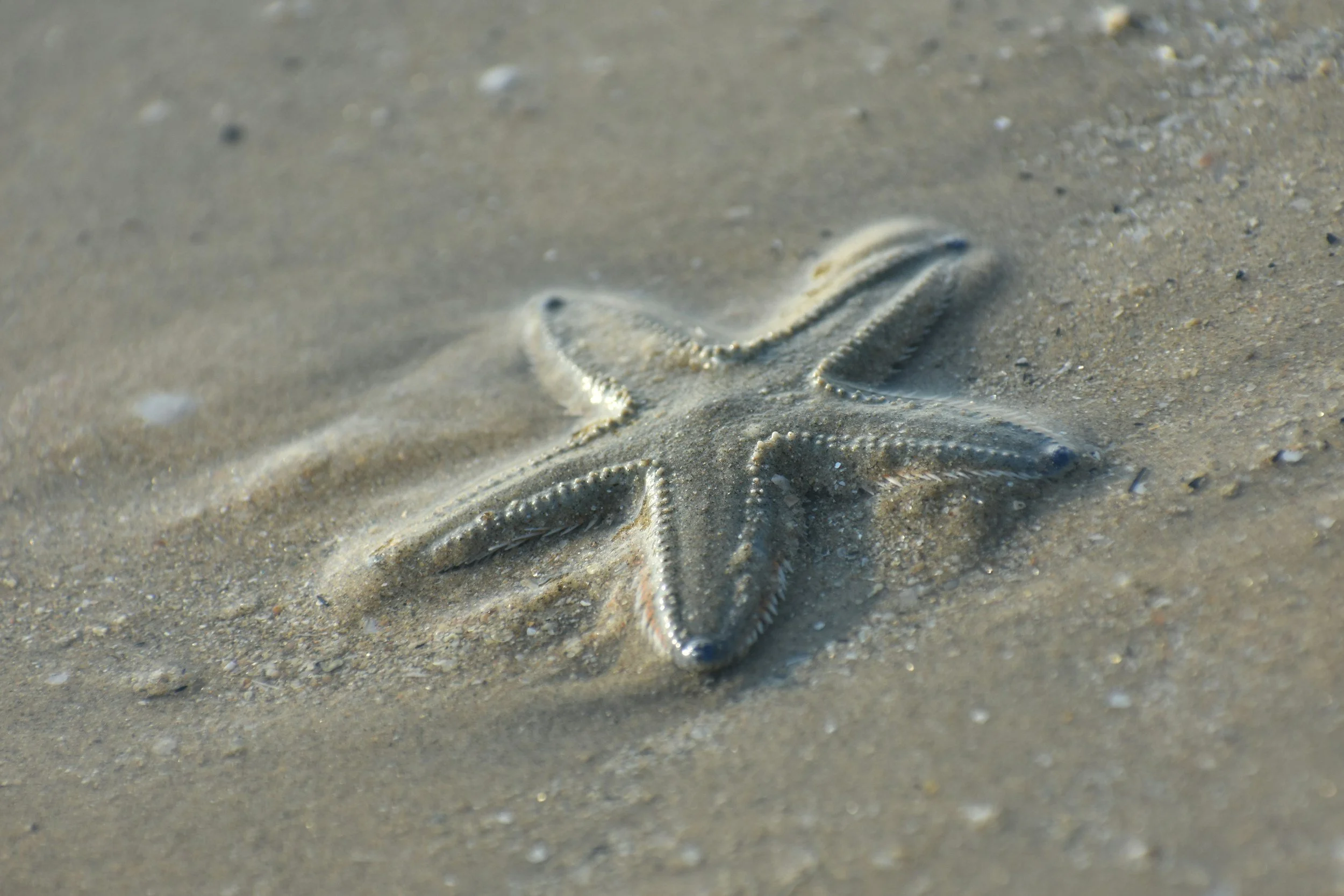
When life pulls back, it's not the end. It's low tide. Here's how to find peace and even some hidden treasures in the lull.
Hi, I'm Laura Zane, a holistic online counselor serving highly sensitive, neurodivergent, and empathic women throughout Florida. Whether you are in Sarasota, Bradenton, Lakewood Ranch, Tampa, or anywhere else in the state, I work with you virtually so that getting support actually fits into your life. A big part of what I do is help women understand the natural rhythms of their emotional world, especially when those rhythms start to feel anything but natural. That is what this post is all about.
We all have peaks and valleys. That part is normal.
We all have them. Those seasons of life when things feel heavy, slow, or stuck. Whether it is a dip in finances, a rough patch in a relationship, or just a quiet erosion of the energy and enthusiasm you usually carry, highs and lows are woven into every human experience. And yet, when we find ourselves deep in a valley, it can feel profoundly isolating. Like something has gone fundamentally wrong. Like we have somehow failed at the business of living.
But what if you have not failed at all? What if you are simply experiencing low tide?
When valleys become anxiety, depression, or burnout
For highly sensitive women, empaths, and neurodivergent folks, including those with ADHD or who identify as HSPs, valleys do not always feel like a gentle dip. They can feel like a crash. When your nervous system is already working overtime to process the world around you, a low period can tip quickly into anxiety, depression, or full-on burnout. The overwhelm becomes paralyzing. The to-do list that was manageable last month suddenly feels impossible. You might find yourself withdrawing, snapping at the people you love, or lying awake at 3am running through everything you have not done.
If that sounds familiar, I want you to know that it is not a character flaw. It is not weakness. It is what happens when a sensitive, high-functioning system gets overloaded without enough rest, grounding, or support. The valley is real. And so is the way through it.
"What if instead of seeing it as a time when everything is spiraling out of control, you thought of it as low tide?"
Think about the ocean. The tide comes in, high and full and powerful, and then it rolls back out. It does not stay at high tide forever, and it does not stay at low tide forever either. That rhythm is constant, reliable, and completely natural. Our lives work the same way. The tide is always moving, even when it does not feel like it.
The stories we tell ourselves matter more than we think
One of the most important things to pay attention to during a low period is the narrative running through your mind. When money feels tight, are you telling yourself, "I am never going to have enough"? When a relationship is struggling, are you spiraling into "This is never going to get better" or "I am never going to find the right person"?
Those "never" thoughts are worth examining. Not because they are silly or wrong to have, but because of what they signal to the world around us. The energy we put out has a powerful effect on what we attract back. If we are constantly broadcasting a frequency of scarcity or hopelessness, we reinforce the very patterns we are desperate to escape. We are essentially telling the universe: do not bother.
This is not about toxic positivity or pretending everything is fine when it is not. Mindfulness teaches us to sit with what is present without immediately trying to fix or flee it. From that grounded place, we can begin to ask: is this thought actually true? Or is this a story my nervous system is telling me because it is exhausted and scared? That is a very different question, and it opens a very different door.
What low tide reveals
Here is something worth sitting with. When you walk along the beach at low tide, you find things that are completely invisible when the water is high. Starfish. Shells. Tide pools full of tiny, intricate life. The low water does not just expose the sand. It reveals what has been there all along, hidden beneath the surface.
Your life's low tide works the same way. When the busyness, the noise, and the rushing current of high-tide living pull back, what gets revealed? Maybe it is a creative longing you have been too busy to tend to. Maybe it is a friendship that deserves more of your time. Maybe it is a quieter version of yourself who has something important to say, if only you would slow down enough to listen.
Low tide is an invitation. Not a punishment.
4 mindful ways to navigate your low tide with intention
Practical tools
Keep a gratefulness journal. Write down even the smallest wins. A smile from a stranger. A moment of sunshine. A cup of coffee that tasted exactly right. Gratitude is not about denying difficulty. It is about training your attention toward what is still working. Over time, what you focus on tends to grow. The universe tends to give you more of what you are already acknowledging.
Reground yourself. Remember that you are standing on the beach watching the tide. You are not the tide itself. When things feel overwhelming, take a breath. Feel your feet on the floor. Notice five things you can see right now. Remind yourself that this moment is not your whole story. Low tide is something happening in your life right now. It is not who you are.
Look for the starfish. Ask yourself: what is available to me right now, in this slower season, that I would not have time or space for at high tide? Maybe it is rest. Maybe it is reconnecting with something you love. The low tide moments in life often hold quiet gifts, if you are willing to look for them instead of just waiting for the water to rise.
Practice meditation or mindful movement. Even five minutes of intentional stillness can shift your nervous system out of fight-or-flight. A walk outside, a breathing exercise, or a simple body scan can help you move from "everything is falling apart" to "I am okay, and I am moving forward." Ask yourself: is my life generally okay? And am I taking steps, even small ones, in the right direction?
You are not alone in the valley
One of the quietest burdens of going through a hard season is the feeling that everyone else seems to be doing fine. That you are the only one struggling while the rest of the world rides a permanent high tide. That simply is not true. Every person you pass on the street has their own low tides, their own valleys, their own moments of wondering when things will turn around.
For highly sensitive and neurodivergent women especially, valleys can carry extra weight because you feel everything more deeply. That is not a bug. That is actually a feature of who you are. But it does mean you need and deserve support that understands how your system works.
When you are in a high tide right now, enjoy it. Celebrate it. Take care of yourself so you have reserves for when the water pulls back. And if you are in a low tide, be patient and gentle with yourself. Tend to your inner landscape. Trust the rhythm. The tide is always moving, and it will come back in.
And when it does, you will have found a few starfish along the way.
Frequently asked questions
Why do highly sensitive people and HSPs struggle more during emotional lows?
Highly sensitive people (HSPs) process emotional and sensory information more deeply than others. That means that during a low period, the feelings are not just louder. They are more layered. A valley that a non-sensitive person might ride out in a week can feel much more consuming for an HSP. This is not a weakness. It is just how your nervous system is wired, and it means you need a different kind of support.
How do I know if my low period is normal or if it has become clinical depression?
Normal emotional valleys tend to lift with time, rest, and self-care. Clinical depression is more persistent. It often includes things like losing interest in activities you used to love, changes in sleep or appetite, difficulty concentrating, and a heaviness that does not seem to move regardless of what is going on around you. If your low has lasted more than two weeks and is interfering with your daily life, it is worth talking to a professional. You do not have to white-knuckle your way through it.
Can ADHD or neurodivergence make emotional valleys harder to manage?
Absolutely. Neurodivergent brains, including those with ADHD, often experience something called emotional dysregulation, which means feelings can swing more intensely and be harder to bring back to baseline. Add in rejection sensitivity, a tendency toward all-or-nothing thinking, and a nervous system that is frequently overstimulated, and a valley can feel really destabilizing. Working with a therapist who understands neurodivergence makes a significant difference
What is the difference between burnout and depression?
Burnout typically comes from chronic, unrelenting stress and overextension, often without enough recovery time built in. It tends to show up as exhaustion, cynicism, and a sense of ineffectiveness. Depression is a clinical condition that can look similar on the surface but has different roots and often requires different treatment. Many highly sensitive women come to me thinking they are just burned out, only to discover there is a depressive layer underneath that needs attention too. Both are real. Both are treatable.
Does online therapy actually work for anxiety and depression?
Yes. Research consistently shows that online therapy is just as effective as in-person therapy for treating anxiety and depression. For many of my clients in Florida, it is actually more effective because it removes the barriers of commuting, scheduling, and the anxiety that sometimes comes with walking into a new office. You can show up from your couch, your car, or wherever you feel most comfortable. And we still do real, deep work together.
How does mindfulness help during an emotional low?
Mindfulness does not make the low go away. What it does is help you stop fighting it so hard, which actually frees up a lot of energy. When you can observe your experience without being completely consumed by it, you create a little space between the feeling and the story you are telling about the feeling. That space is where choice lives. Mindfulness practices like grounding, body scans, and breath work are things I weave into my work with clients regularly.
Ready to stop white-knuckling your way through the low tide?
I work with highly sensitive, neurodivergent, and empathic women throughout Florida through online counseling that fits your real life. If you are dealing with anxiety, depression, or burnout and you are ready to do some real work, I would love to connect. Bring a willing heart. I will bring the a listening ear.

5 Great Ways To Get Centered when you are feeling Anxious
It’s important to keep yourself grounded in the midst of the chaos. I wanted to share with you today about how to get centered when you're feeling chaotic.
All of us have experienced those times where we feel like our head is spinning. Sometimes it feels like nothing is going as planned and life is just testing you left and right. It’s important to keep yourself grounded in the midst of the chaos. I wanted to share with you today about how to get centered when you're feeling chaotic. There are five ways that I tell my clients that you can get quick, fast relief from a little bit of the stress.
The first way to get some relief from chaos is to do some controlled breathing. It is often recommended breathing in through your nose and out through your mouth to help calm you down. Take a second to do it with me. So you're going to breathe in, hold it for as long as you can, and breathe out through your mouth and repeat this as many times as you need to. Another way to do this is to block off one nostril, breathe in through that nostril, switch to blocking off the other nostril, and then breathe out through that nostril. That's a quick strategy to get yourself centered. The alternate nostril breathing technique gets both sides of your brain talking and calms you down pretty quickly.
The second thing you can do to get yourself centered is visualize. Visualize yourself in a calmer state of mind. Visualize not only when you're in the midst of chaos, but also while you're in a relaxed state. While you're in a relaxed state of mind, you can touch a part of your body and that will teach you that when you touch this spot, it will trick your brain into thinking you're calming down. There's an acupuncture point that I recommend using as your grounding point. You go straight up from your hand, on your wrist, there's a little divot there. If you squeeze that when you're not feeling calm you will trick your body into thinking that you're supposed to feel relaxation during that time. The other thing is to visualize a peaceful place, whatever that peaceful place is for you. For some people, it's the beach or a mountain stream. But take just about 15 seconds and visualize yourself there. It will help your body recognize that you are moving to become this.
The third thing you can do is let go and trust your higher power. Now not everyone believes in a higher power. And that's perfectly okay! If you do, or if you don’t, realizing things are out of your control is a way to bring some calm to your chaos. Sometimes when we're feeling chaotic, it's because of internal feelings. So reminding yourself that chaos is sometimes about things falling into place, not falling apart. When we clean out a closet, our closet is completely empty and our bedroom is chaos. But when we start putting stuff back together, we're actually cleaning some of the chaos is the beginning of putting things back together. So always remind yourself of that.
Another strategy to seek calm throughout chaos is to get outside for just a few minutes. If you can sit in the grass for 15 minutes, studies show that your anxiety levels and your depression levels decrease. This is a great thing to do, especially if you have kids. Take them outside, sit in the grass, make sure your feet or your hands are touching the Earth. If you're sitting on concrete, it doesn't have the same effect. So get your body grounded, get outside, make sure that you're getting fresh air every day.
The fifth thing is if you have a pet, put your hands on them and pet them. Most pet owners know about the immediate joys that come with sharing their lives with companion animals. This actually helps calm you down and fills the basic human need for touch. Petting, hugging, or otherwise touching a loving animal can rapidly calm and soothe you when you’re stressed or anxious. It's a quick way to help you get calm by taking a few minutes and petting an animal.
Those are the five quick strategies I tell my clients to help get grounded when things are feeling hectic. If there is more you'd like to know about, or if you want me to go into more details with a couple of these strategies, please leave let me know! That would be super helpful so I can give you guys more of what you're looking for. I can even do a meditation for you all if you think that's something you'd like. I look forward to talking to you!
