

You Work From Home — How Do You Have Work Besties?
You Work From Home — How Do You Have Work Besties?
“You work from home… how do you have work besties?”
That’s what my husband asked me after I got back from a local networking event.
He said it with genuine curiosity, not sarcasm.
And it got me thinking.
There’s this assumption that if you work from home, especially as a therapist or healer, you’re sitting in a room by yourself, slowly spiraling into professional isolation. But for me, the truth is quite the opposite….
Returning home from a Saturday networking event, excited and in full ADHD chatter about how much fun I had, how I really enjoyed doing this event with one of my work besties, lost in the dopamine hit as only a true ADHDer can be, I was interrupted by my husband:
“You work from home… how do you have work besties?”
He said it with genuine curiosity, not sarcasm.
Screeched to a halt came the dopamine excitement, and the excitement of the networking train of thought, a sudden shift of tracks….
OH that’s right, I have a whole world that is not in my everyday life, yet a part of my everyday life. Maybe it’s time to talk about that!
There’s this assumption that if you work from home, especially as a therapist or healer, you’re sitting in a room by yourself, slowly spiraling into professional isolation. But for me, the truth is quite the opposite.
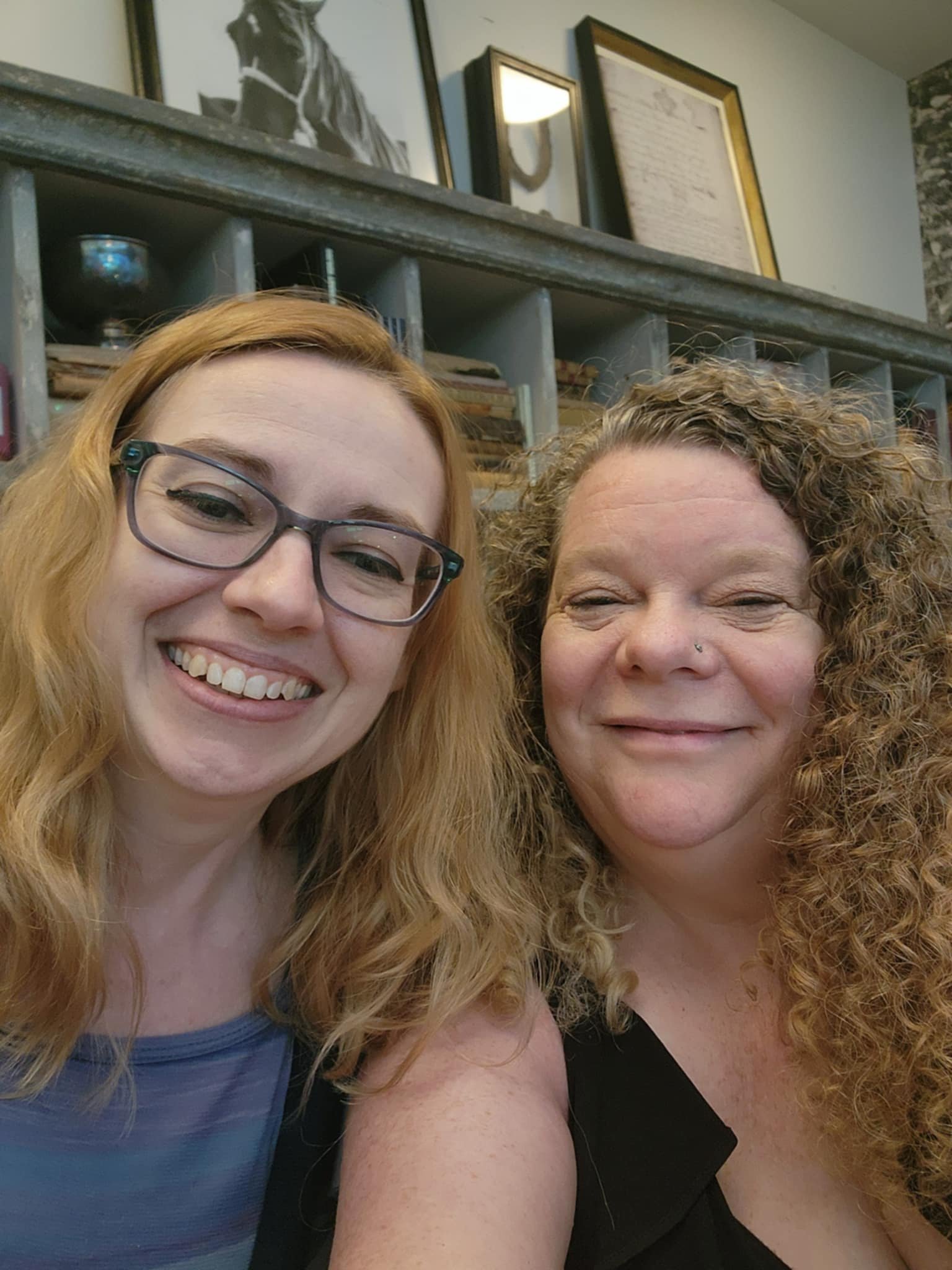
My Bestie Brie-Anna Willey from Business for Nerds find her @https://www.businessfornerds.com/
I Have Work Besties — They Just Don’t All Live Here (well some do, but most don’t)
I have several work besties, and they live all over the country.
Some of them, I’ve never met in person — we found each other online through coaching programs, collaborations, or even social media threads that turned into real friendships.
Others are local — we’ve met for coffee now and then — but most of our connection happens online. We hop on Sunday Zoom calls, check in by voice note, and co-work in real time, from wherever we are.
These relationships? They’re real.
They’re intentional.
And they’re saving me from burnout.
I Was Afraid Going Online Would Be Lonely
As a therapist, I need connection with others who understand what this work takes — emotionally, mentally, energetically.
I used to think working online would strip that away. That I'd be trading connection for convenience. But then I watched my kids build real friendships online — deep, trusting ones. They’d laugh, support each other, and build community in Minecraft or Discord the way I used to at lunch tables and break rooms.
And I thought… why not me?
Online Friendships Can Be Deeper Than In-Person Ones
And honestly? I prefer these relationships to many I had in past in-person jobs.
Back then, we connected mostly because we showed up at the same office. Now, my work besties are people I chose. People who chose me.
We make time to meet — not because we’re forced into the same break room — but because we value each other’s support. We bounce around ideas, talk marketing and mindset, cry, laugh, vent, and get each other through the weirdness that is online entrepreneurship.
They’ve seen me in every state:
Polished and put-together before a presentation
Disheveled and under-caffeinated on a Sunday brainstorm call
Fragile after a tough week with clients
Buzzing with excitement after a big win
These people get me — my work, my energy, my mission. They challenge me…to grow, confront my fears, to TALK about my money challenges.
Neurodivergent Folks Often Prefer This Way of Connecting
I work with many neurodivergent and highly sensitive women, and let me tell you — this kind of connection works for us.
We don’t always thrive in noisy mixers or drop-in groups full of surface-level small talk, it’s exhausting and often feels like we are pushing against our natural desire to go deep fast. We CAN do it, it just leaves us depleted and takes a lot of our spoons.
We like the slow burn of connection — repetitive, intentional interactions that help us decide if someone is safe, aligned, consistent.
And when we do connect around shared goals or mutual understanding?
We skip the water cooler and dive into the deep end.
So Yes — I Have Work Besties
I never imagined going online would grow my sense of community. But it did.
My work besties are a lifeline. A mirror. A brain trust. A nervous system regulation squad.
If you’re thinking about going online — whether as a therapist, coach, healer, or creative — I want you to know that isolation doesn’t have to be your fate.
With a little intention, you can build the community you need.
You can find your people.
You can create meaningful connection — even from your kitchen table in pajama pants.
One More Thing
If you’re sitting in your home office wondering if you’ll ever find your people, consider this your nudge.
✨ Start a conversation.
💛 Join that group.
🌱 Say hi to someone new at the next Zoom event.
Your future work bestie might be one message away.
Frequently Asked Questions
Can online work friendships be as meaningful as in-person friendships?
Absolutely. Meaningful friendships are built through trust, consistency, vulnerability, and shared experiences, not physical proximity. Many people find that online friendships become just as deep, and sometimes even deeper, because they're based on shared values and intentional connection rather than simply working in the same building.
Why do online friendships feel easier for some neurodivergent people?
Many neurodivergent people prefer connection that develops gradually through shared interests and repeated interactions. Online spaces often reduce the pressure of loud environments, small talk, and social expectations, making it easier to build authentic relationships at a comfortable pace. Rather than being forced into conversations because of proximity, online friendships often grow because of shared interests, mutual respect, and genuine choice.
Can working from home lead to isolation?
It can, but it doesn't have to. Working remotely requires being intentional about creating community. Joining professional groups, attending virtual networking events, participating in mastermind groups, scheduling coworking sessions, or simply checking in with colleagues can all help reduce isolation and build meaningful connection.
How can I make friends while working remotely?
Start by participating in communities centered around your interests or profession. Join Facebook groups, attend virtual events, participate in coaching programs, comment on posts, or simply reach out to someone whose work resonates with you. Many lasting friendships begin with one genuine conversation.
Are online friendships "real" friendships?
Absolutely. Research has shown that online friendships can provide emotional support, belonging, and meaningful connection comparable to in-person relationships. Like any friendship, what matters most is trust, consistency, vulnerability, and showing up for one another over time.
I'm highly sensitive and networking events exhaust me. What are other ways to meet people?
Many highly sensitive and neurodivergent people find they connect more naturally through smaller communities, shared interests, coworking sessions, book clubs, mastermind groups, online classes, or ongoing programs where relationships have time to develop naturally. You don't have to force yourself into environments that leave you depleted in order to build meaningful friendships.
Can online friendships help prevent burnout?
For many therapists, entrepreneurs, coaches, creatives, and remote professionals, yes. Having trusted colleagues to celebrate successes, process challenges, exchange ideas, and remind you that you're not alone can reduce isolation and become an important source of emotional support. Sometimes a quick Zoom call with someone who understands your work is exactly what your nervous system needs.
What if I'm naturally introverted?
Being introverted doesn't mean you don't need connection. It often means you prefer fewer, deeper relationships over frequent social interaction. Online communities can make it easier to build those relationships in ways that feel authentic, intentional, and sustainable.
Is it okay if my closest work friends live across the country?
Absolutely. Friendship isn't measured by geography. It's measured by trust, authenticity, and the willingness to show up for one another. Some of the deepest relationships are built not because people share an office, but because they share values, encourage one another's growth, and intentionally choose to stay connected. In many ways, those relationships can become even stronger because they're built on who you are, not simply where you work
How do I know I've found "my people?"
For me, it's less about finding people who agree with everything I say and more about finding people who make it safe to be fully myself. The right people challenge me, celebrate my wins, support me through setbacks, and leave me feeling energized rather than depleted. You don't have to settle for relationships built on convenience. Sometimes the people who understand you best are the ones you intentionally choose, no matter where they live.
Is it normal to feel guilty for preferring online friendships?
Yes. Many people have been taught that "real" friendships have to happen in person. But meaningful relationships are built through mutual care, consistency, and emotional safety, not zip codes. If your online friendships leave you feeling more connected, understood, and supported than many of your in-person relationships, there's nothing wrong with embracing that.
Can online friendships improve mental health?
They can. Feeling understood, supported, and connected is one of the strongest protective factors for emotional well-being. While online friendships aren't a replacement for professional mental health care when it's needed, they can reduce loneliness, provide encouragement, and remind us that we're not navigating life or work alone.
❤️ Final Thought
Whether your work besties live next door or across the country, meaningful relationships are built intentionally. Sometimes the people who help us grow, laugh, challenge us, and remind us who we are aren't sitting in the next office. They're one message, one Zoom call, or one "I saw your post and just wanted to say hi" away.
Because belonging isn't about proximity.
It's about finding people who feel like home.

Do Therapists Think About Their Clients? The Peculiar Bonds of Healing
Being a therapist is an intricate journey, where the tapestry of emotions unfolds in ways that often defy explanation. We dwell with individuals at their most vulnerable, witnessing the ebb and flow of their struggles and triumphs. The narratives shared in the therapy room cut deeper than those in conventional relationships, revealing intimate details that seldom see the light of day. Yet, within this authenticity, a subtle power differential exists – a nuanced dance between presence and disclosure, all orchestrated to benefit the client. 🎭💖
Grief Trigger warning
Many people quietly wonder whether their therapist ever thinks about them outside the therapy hour. They wonder whether the connection they feel in the room continues beyond the session.
Therapy Is a Relationship Unlike Any Other
Being a therapist is a strange and meaningful profession. We sit with people at their most vulnerable moments and witness the quiet unfolding of their struggles and triumphs. It is a place where the tapestry of emotions unfolds in ways that often defy explanation and is frequently unnatural in the real world. We dwell with individuals at their most vulnerable, witnessing the ebb and flow of their struggles and triumphs. The stories shared in the therapy room cut deeper than those in conventional relationships, revealing intimate details that seldom see the light of day. We see the real human….messy, raw, complicated, and indescribably beautiful Yet, within this authenticity, a subtle power differential exists – a nuanced dance between presence and disclosure, all orchestrated to benefit you, my client. 🎭💖
Caring Deeply While Holding Professional Boundaries
In this peculiar profession, the paradox is palpable. I am here to care deeply about you but must navigate the boundaries carefully, ensuring I don't overstep. The role extends beyond the therapy hour; I root for you, cheer you on, and find myself shedding tears when life throws challenges your way. Despite these emotional investments, it's crucial to remember that, in the end, I am not your friend. The struggle emerges when thoughts of you linger between sessions, prompting an internal debate about sharing a meme or initiating a casual greeting if our paths cross in public. Professional ethics, however, dictate that I cannot. I must always default to your lead, urging me to wait for you to make the first move. 🤔🤝
These relationships formed in the sanctuary of therapy are sometimes exclusive, and shared only by the two individuals involved. As time progresses, clients may naturally drift away, and despite the deep connections forged, we often lose touch.
Yet, the paradox persists: the therapeutic relationship is a relationship nonetheless. My clients touch my life as profoundly as I touch theirs, forming an emotional bond that transcends the realm of financial transactions. 💼💓
The Clients Who Stay With Us
As the years pass, reflections inevitably emerge about those who have woven through my professional journey, leaving a lasting impact. Did my time with them make a meaningful difference? Did their lives change for the better? Some clients pass through swiftly, their details fading from memory like fragments of a dream, but others, those forever imprinted in my heart, stay with me, becoming an indelible part of my own narrative. 📅📝
When a Former Client Passes Away
Thinking back to my early career as a school guidance counselor, I remember the "kiddos" who, even in adulthood, still hold a significant place in my heart. Today, the news of one of these forever kiddos passing reached me. It's a peculiar experience to witness the child you once knew grow into an adult, and you can't help but hope they are navigating the complexities of adulthood with resilience. The passing of a client prompts a cascade of questions about the impact I've had – did it matter? Did I genuinely help them along their journey? Did they know how deeply they were loved and supported? 🌟❤️
Today, the weight of emotions manifested in freely flowing tears, and a part of my heart broke. Not because my life is destined for a drastic change, but because, as a fellow human, I bid farewell to someone cherished. Someone I loved. A fellow life traveler, I was fortunate enough to guide. When you wonder if your therapist thinks of you between sessions, the resounding answer is yes. We think of you, root for you, and even shed tears long after our official time together ends. As therapists, we navigate the intricacies of our clients' lives, hoping that, in some meaningful way, we contributed to positive change. 🌈💔
Therapy relationships are professional and still deeply human. So, if you’ve ever wondered whether your therapist thinks of you after sessions end, the answer is yes. Many of us carry our clients in our hearts long after the therapy hour is over.⏰ ❤️
Questions People Often Ask About the Therapy Relationship
Do therapists think about their clients between sessions?
Yes. Many therapists naturally reflect on their clients between sessions, especially when preparing for future work together. While therapists maintain professional boundaries, the people they work with often stay on their minds as they hope for their growth and healing.
Why can’t therapists say hello first in public?
Therapists are trained to protect client privacy. If we greeted a client first in public, it could unintentionally reveal that the person is in therapy. Because of this, therapists usually wait for the client to acknowledge them first.
Do therapists care about their clients?
Yes. Healthy therapy involves genuine care and compassion. Therapists are trained to balance empathy with professional boundaries so they can support clients effectively without the relationship becoming confusing or harmful.
Do therapists remember their clients after therapy ends?
Often, yes. Some clients fade from memory over time, but many remain meaningful parts of a therapist’s professional journey. The work done together can leave a lasting impression on both people involved.
Considering Therapy?
Therapy relationships are unique spaces where trust, vulnerability, and healing can unfold over time. If you're looking for support with burnout, sensitivity, trauma, or life transitions, you can learn more about my approach to therapy here: