Is what you are actually feeling yours? A Guide for Empaths in Florida
Prefer to watch? The video above covers the highlights. Keep reading for the full guide including grounding techniques and FAQs.
Just because you are feeling it does not mean it belongs to you. Here is how to tell the difference and give back what was never yours to carry.
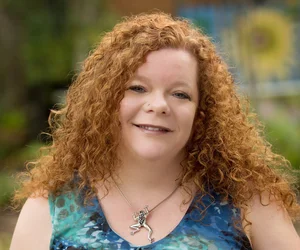
Hi, I'm Laura Zane, a holistic online therapist serving highly sensitive, neurodivergent, and empathic women throughout Florida. One of the questions I get asked most often, and one that has come up repeatedly with clients week after week, is some version of this: "I don't know why I feel so sad right now. Nothing is actually wrong in my life." If that sounds familiar, this post is for you.
Because here is something that most people, and even most therapists, do not talk about enough. Just because you are feeling something does not mean it is yours
Empaths absorb the world around them. That is not a metaphor.
If you identify as an empath, a highly sensitive person, or a neurodivergent woman who feels things deeply, you already know that you experience the emotional world differently than most people. You walk into a room and immediately sense the energy. You scroll through social media and feel the weight of what you read long after you put your phone down. You sit across from someone who is struggling and find yourself struggling too, even if you had been perfectly fine five minutes before.
This is not your imagination. This is how your nervous system works. Empaths and HSPs have a heightened ability to absorb and process the emotional energy of the people and environments around them. It is one of your greatest gifts. It is also, when unmanaged, one of your greatest sources of confusion and exhaustion.
"Just because you are feeling it does not necessarily mean it is yours to own."
When you are feeling sadness, anxiety, or anger and you cannot trace it back to anything specific in your own life, it is worth pausing and asking a different question. Not "why am I feeling this" but "whose is this?"
The world around you amplifies everything you feel
There are times when the collective energy around us is especially heavy. Local environmental issues, news cycles, social media, the people in our immediate circle, and even broader energetic shifts can all land in the body of a sensitive person like a wave they never saw coming. When the world is stirred up, empaths feel it first and feel it most.
For those of us who are sensitive, this kind of amplified energy does not always announce itself clearly. Instead it shows up as a vague depression that seems to come from nowhere. A low-grade anxiety that does not have a clear source. A heaviness that makes you feel like you cannot do anything, even though nothing has actually gone wrong in your personal world. Sound familiar?
This is especially true when there is environmental distress in your area, collective grief or fear in your community, or when you have been spending time with people who are carrying a lot. Your system picks it all up. And if you are not paying attention, you will start to believe that what you are absorbing is actually yours.
How to tell if what you are feeling belongs to you
This is the most important skill an empath can develop. Mindfulness gives us a way to step back from our feelings and observe them rather than simply be swept away by them. From that grounded place, you can start to ask some real questions.
Pause and notice. When a feeling arrives, especially one that feels sudden or out of place, stop for a moment. Take a breath. Do not immediately try to explain or fix it. Just notice it is there.
Ask: was I feeling this before? Think back to before you entered the room, had the conversation, opened social media, or watched the news. Were you already feeling this way? Or did it arrive with something external?
Check the source. Is there something happening in your own life right now that would explain this feeling? If the answer is no, that is important information. The feeling may belong to someone or something outside of you.
Give it back. This is not about being cold or uncaring. It is about energetic boundaries. You can acknowledge someone's pain, offer compassion, and still consciously choose not to carry it as your own. Visualize handing it back, gently and with love.
Ground yourself. Feel your feet on the floor. Take three slow breaths. Notice five things you can see around you. Grounding brings you back into your own body and your own emotional baseline, where you can get a clear read on what is actually yours.
You cannot fix the whole world. And that is okay.
One of the most painful patterns I see in highly sensitive and empathic women is the weight of feeling responsible for everything. The suffering in the news. The friend who is struggling. The state of the environment. The collective grief of an entire community. Empaths want to fix it all, and when they cannot, the guilt and helplessness can feel crushing.
Here is what I want you to hear. You do not have to take on the world to make a difference. What you can do is identify what is actually yours to work with and focus your energy there. Maybe that looks like signing a petition. Maybe it means showing up for one person who needs you. Maybe, and this is just as valid, it means recognizing that right now your energy is needed for your own family, your own healing, your own rest. That is not giving up. That is wisdom.
Even the smallest action, taken with intention, creates a ripple effect. You do not have to carry all of it to matter. You just have to show up for the piece that is genuinely yours.
Self care is not optional for empaths. It is essential.
When the world feels heavy and you are absorbing more than usual, self care becomes less of a nice idea and more of a non-negotiable. Sleep, boundaries, time in nature, quiet, and mindful practices like grounding and meditation are not luxuries for highly sensitive people. They are the infrastructure that keeps your nervous system functioning.
When you are well rested, boundaried, and grounded, you are actually better equipped to show up for the people and causes you care about. Taking care of yourself is not selfish. It is how you sustain your capacity to give.
Frequently asked questions
How do I know if I am an empath or just a highly sensitive person?
These two things often overlap significantly. A highly sensitive person (HSP) has a nervous system that processes sensory and emotional information more deeply than others. An empath tends to go a step further, actually absorbing or taking on the emotional states of people around them, sometimes to the point of losing track of where their own feelings end and someone else's begin. Many of my clients are both. The good news is that the tools for managing both are very similar: grounding, emotional boundaries, and mindful awareness of what belongs to you.
Is absorbing other people's emotions a real thing or is it in my head?
It is very real, and it is not something to be embarrassed about. Research on mirror neurons suggests that humans are wired to resonate with the emotional states of others. For empaths and HSPs, this system is simply more sensitive than average. You are not making it up. You are experiencing something that is genuinely happening in your nervous system, and learning to work with it rather than against it is one of the most powerful things you can do.
Why do I feel more anxious and depressed when things are happening in the news or on social media?
Because your nervous system does not clearly separate what is happening to you from what is happening around you. When you scroll through distressing content, your body responds as if the threat is personal and immediate. For highly sensitive people this effect is amplified. Limiting your news and social media intake, especially during already difficult emotional periods, is not avoidance. It is nervous system hygiene.
How do I stop absorbing other people's energy without becoming cold or disconnected?
This is the question I hear most often and it is such a good one. The goal is not to stop feeling. It is to feel with awareness. When you develop the practice of checking in and asking "is this mine?" you can stay compassionate and present with others while still maintaining a clear sense of your own emotional baseline. Think of it as keeping a hand on your own heartbeat even while you reach out to someone else.
Can therapy help with being an empath or highly sensitive person?
Yes, absolutely. Working with a therapist who actually understands the empath and HSP experience makes a significant difference. A lot of highly sensitive women have spent years in therapy with well-meaning therapists who did not quite get it, and they leave feeling like something is wrong with them. There is nothing wrong with you. You just need support that is designed for how your system actually works. That is exactly what I offer through online therapy for empaths and HSPs throughout Florida.
What are some quick grounding techniques for empaths who feel overwhelmed?
Some of my favorites are the 5-4-3-2-1 technique (notice 5 things you can see, 4 you can touch, 3 you can hear, 2 you can smell, 1 you can taste), slow diaphragmatic breathing, placing your feet flat on the floor and pressing down, holding something cold or warm in your hands, and spending even five minutes outside in nature. These practices bring you back into your own body and out of the absorbed emotional field of whatever or whoever you have been around.
Ready to figure out what is actually yours?
If you are an empath, HSP, or highly sensitive woman in Florida who is tired of carrying emotions that do not belong to you, I would love to help. Through online therapy, we can work together to build the emotional boundaries, grounding practices, and self-awareness that let you stay connected to the world without drowning in it. Bring a willing heart. I will bring the tea.