
Why You Feel Everything More During Retrograde Season: A Guide for Empaths and Highly Sensitive Women
So let me tell you what I have been hearing a lot lately in my practice. Variations of this: "I do not know why I feel so heavy right now. I know nothing is actually wrong in my life. I know I should not feel this anxious or this sad. But here I am."
If that sounds familiar, let's talk about what might actually be going on.
What retrograde season actually does to a sensitive nervous system
First, a quick middle-ground explanation for those of you who are somewhat familiar with astrology but do not consider yourselves experts. A planet in retrograde is not actually moving backward. It is an optical illusion based on the relative movement of Earth and that planet in their orbits. But what astrology teaches, and what many of my clients experience viscerally, is that retrograde periods tend to bring a slowing down, an inward pull, and a stirring up of energy that was already present beneath the surface.
Part of the Woo-Fluent™ Series: When the planets shift, sensitive nervous systems feel it first. Here is what is actually happening and what to do about it.
Hi, I am Laura Zane, a licensed therapist and the creator of the Woo-Fluent™ framework at Sage Synergy Counseling and Wellness. I work with highly sensitive, neurodivergent, and empathic women throughout Florida who feel things deeply and are done pretending they do not. I am also someone who takes planetary energy seriously. Not as a replacement for clinical thinking, but as a real and valid layer of the human experience that most therapists will not talk about with you. I will.

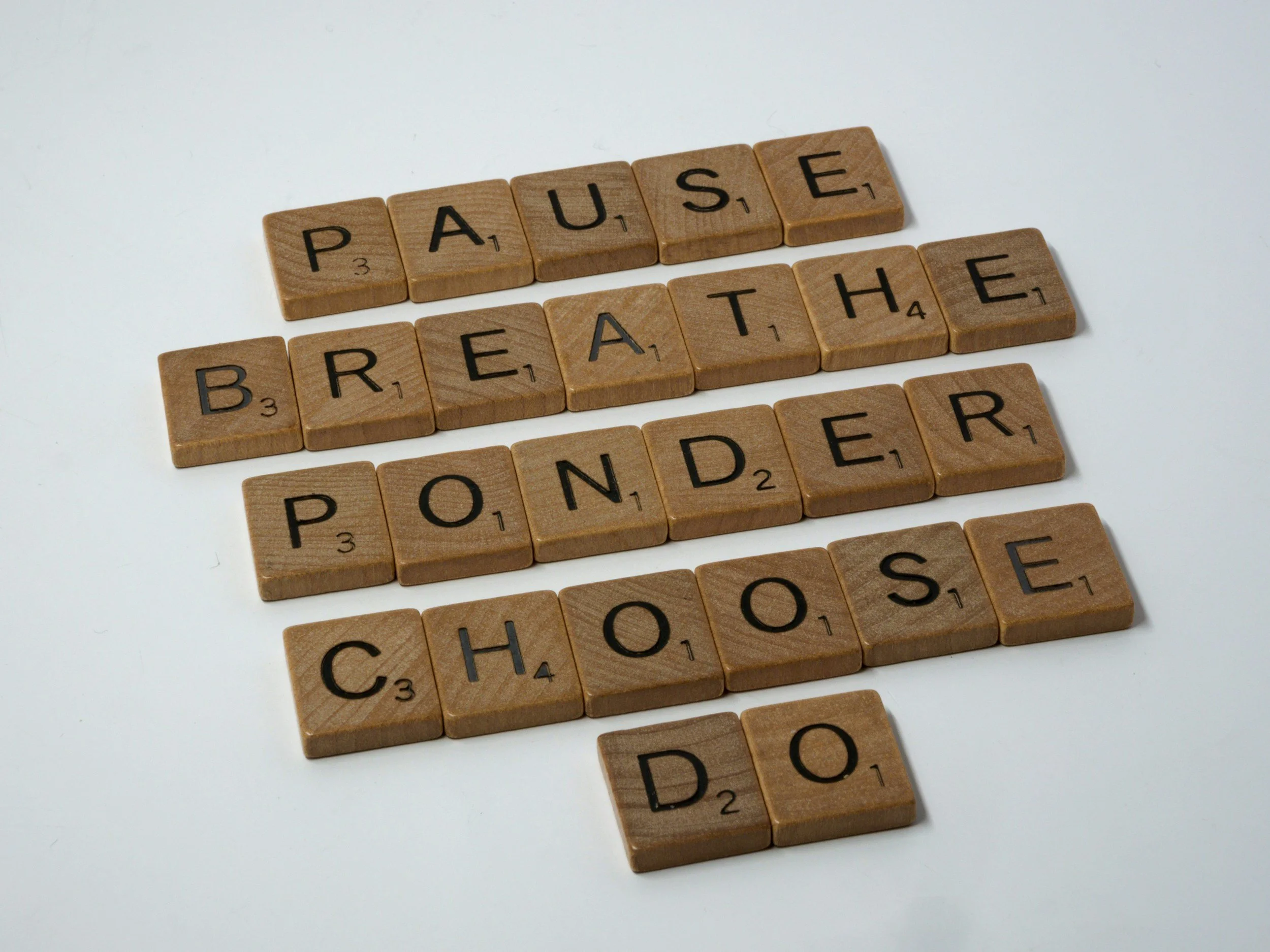
Photo by: Am on Unsplash
So let me tell you what I have been hearing a lot lately in my practice. Variations of this: "I do not know why I feel so heavy right now. I know nothing is actually wrong in my life. I know I should not feel this anxious or this sad. But here I am." And that is something that comes up every single retrograde cycle, like clockwork. If that sounds familiar, let's talk about what might actually be going on.
What retrograde season actually does to a sensitive nervous system
First, a quick middle-ground explanation for those of you who are somewhat familiar with astrology but do not consider yourselves experts. A planet in retrograde is not actually moving backward. It is an optical illusion based on the relative movement of Earth and that planet in their orbits. But what astrology teaches, and what many of my clients experience viscerally, is that retrograde periods tend to bring a slowing down, an inward pull, and a stirring up of energy that was already present beneath the surface.
When multiple planets are in retrograde at the same time, that amplification compounds. For most people this might look like technology glitches, miscommunications, or a general sense of things feeling off. For empaths and highly sensitive people it can feel like a full nervous system overload. The emotional volume of everything gets turned way up.
"Just because you are feeling it does not mean it is yours. And just because the timing feels cosmic does not mean you are making it up."
Here is what I want you to understand clinically and cosmically. Your nervous system as a highly sensitive or empathic person is already processing more information than the average person. You absorb the emotional states of people around you. You pick up on the energy in a room before anyone has said a word. You feel the collective weight of what is happening in your community, your news feed, your environment. That is not metaphor. That is how your system works.
When retrograde energy amplifies the collective field, your already-sensitive system absorbs more of it. The sadness you are feeling may not be about your life at all. It may be the grief of your community, the anxiety of the people closest to you, or the energetic weight of something much larger than your personal circumstances. That is real. And it deserves to be taken seriously.
Your environment is part of your emotional landscape too
This is something I talk about with my Florida clients especially. We live in a state where environmental issues like red tide, algae blooms, and water quality concerns are not just news stories. They are felt. If you are a sensitive person who loves the water, who feels connected to the natural world, and who picks up on collective distress, local environmental suffering lands in your body differently than it does for others.
This is not weakness. This is your nervous system doing exactly what it is built to do. The challenge is learning to acknowledge what you are absorbing without drowning in it. Feeling the weight of the world is part of being wired the way you are. Carrying it as if it is all yours to fix is where it becomes unsustainable.
How to tell what is yours and what belongs to the collective
This is the most important practice I teach empaths and highly sensitive people, and retrograde season is when it matters most. Mindfulness gives us a way to pause, observe, and get curious about our experience rather than just being swept away by it.
The retrograde check-in practice
Pause before you personalize. When a heavy feeling arrives, especially one without a clear source, stop before you start writing a story about what it means about your life. Ask first: was I feeling this before I opened social media, before I talked to that person, before I read that news story?
Do a personal inventory. Is there something actually happening in my own life right now that would explain this feeling? If you genuinely cannot find the source in your own circumstances, the feeling may belong to the collective field, not to your personal story.
Ground yourself physically. Feel your feet on the floor. Put your hands on your belly. Take three slow breaths. Grounding brings you back into your own body and helps you separate your emotional baseline from what you have absorbed from outside yourself.
Limit your energetic intake. During heavy retrograde seasons, this is not the time to scroll endlessly, have the big hard conversations, or take on everyone else's problems. Protect your field intentionally. This is not avoidance. It is nervous system hygiene.
Do what is yours to do and release the rest. You do not have to fix the world. Figure out what is actually in your power, your small sphere of influence, and put your energy there. Sign the petition. Show up for the friend. Rest so you have something to give tomorrow. Then consciously release what is not yours to carry.
You are an analyzer by nature. Retrograde amplifies that too.
One of the hallmarks of being highly sensitive or neurodivergent is a tendency toward deep analysis. You do not just feel things, you think about why you feel them, what they mean, what you should do about them, and what it says about you that you feel them at all. During retrograde season this analytical loop can go into overdrive.
Mindfulness is not about stopping the analysis. It is about creating a little bit of space between the feeling and the story you are building around it. When you can observe your own process with some curiosity rather than getting completely consumed by it, you reclaim your ability to choose how to respond rather than just react.
That space is where your clarity lives. And it is accessible to you even when the planetary energy is heavy and the collective field is loud.
You cannot save the world. That is actually okay.
Empaths and highly sensitive people tend to feel responsible for everything. The suffering in the news. The struggling friend. The state of the waterways. The collective grief of an entire community during a difficult season. When you feel it all so deeply it is natural to want to fix it all.
But here is what I come back to with my clients again and again. Even the smallest action taken with intention creates a ripple effect. You do not have to carry all of it to matter. You just have to show up for the piece that is genuinely yours. Maybe that is signing a petition. Maybe it is making sure you get enough sleep so you have something to give the people who need you most. Maybe it is recognizing that right now your job is to take care of yourself, and that is enough.
The idea that start local and affect global is not a consolation prize. It is actually how change works. And it is how sustainable, sensitive people stay in the game long term rather than burning out completely by trying to hold everything at once.
Frequently asked questions
Is it really possible that planetary retrograde affects how I feel emotionally?
From a clinical perspective, I can tell you that collective energy is real. When large numbers of people are experiencing heightened anxiety, grief, or overwhelm simultaneously, that collective state ripples through social networks, media, and direct human contact in ways that affect all of us. For highly sensitive people and empaths who are already wired to absorb the emotional states of others, those collective shifts land harder and faster. Whether you attribute that to planetary influence, collective consciousness, or pure nervous system sensitivity, the experience is valid and the tools for managing it are the same.
Why does Mercury retrograde seem to hit me harder than other people?
Mercury retrograde is associated with communication, technology, and mental processing. For neurodivergent and highly sensitive people whose nervous systems are already working overtime to process information, a period that energetically amplifies those same areas can feel particularly destabilizing. You are not imagining it. Your system is just more finely tuned to those frequencies than the average person.
How do I protect my energy during heavy astrological seasons without becoming isolated?
The goal is not to disconnect from the world. It is to engage with it more intentionally. During heavy seasons that means being selective about what you consume and when, building in more grounding and recovery time than usual, choosing your social interactions with more care, and having a daily practice that brings you back to your own baseline. You can stay connected and protective at the same time. It just requires more intentionality than it does during easier seasons.
I identify as an intuitive or empath but I also have ADHD. Does that make retrograde season harder?
Often yes. ADHD nervous systems already struggle with emotional regulation, rejection sensitivity, and the ability to filter out what is not immediately relevant. Add the amplified collective energy of a retrograde period on top of a system that is already processing a lot, and the overwhelm can feel really significant. Working with a therapist who understands both the neurodivergent experience and the empathic or intuitive experience makes a real difference during these seasons.
Is it okay to take a break from the news and social media during retrograde?
Not only is it okay, for many highly sensitive and empathic people it is genuinely necessary. There is nothing spiritually or ethically wrong with protecting your nervous system during a heavy season. Staying informed does not require you to be continuously immersed in distressing content. You can care deeply about the world and still give yourself permission to step back and recharge. In fact for sensitive people, rest is often how you build the capacity to keep showing up.
How is what you do different from seeing a regular therapist?
I bring two decades of clinical training and licensure alongside a genuine, lived understanding of what it means to be highly sensitive, neurodivergent, and spiritually aware. I am not going to pathologize your intuitive gifts, dismiss your experience of collective energy, or ask you to leave your spiritual framework at the door. I call this being Woo-Fluent™. It means I speak both languages, clinical and cosmic, and I will not make you choose between them in our work together.
Ready to stop white-knuckling your way through every heavy season?
If you are a highly sensitive, neurodivergent, or empathic woman in Florida who is tired of feeling everything and not knowing what to do with it, I would love to work with you. Through online therapy we can build the grounding practices, energetic boundaries, and self-awareness that let you stay connected to the world without drowning in it. Bring a willing heart. I will bring the tea.
Does this resonate, but therapy is not what you are looking for right now?
There is an important distinction between therapy and spiritual coaching, and both are valid paths depending on where you are. If you are looking for spiritual guidance, empath support, or intuitive coaching rather than clinical mental health treatment, that work lives at Coaching for Empaths. Visit the link below to learn more about how we can work together outside the therapy room.
The Capable & Overwhelmed Trap: When Looking Fine on the Outside Means Suffering Inside
From the outside, you look like you have it together. You are capable, reliable, and the one people count on. But inside, you are overwhelmed, exhausted, and quietly running on empty. This is what neurodivergent burnout can look like, especially for women who have learned to mask and carry more than their nervous system was ever meant to hold. If that sounds familiar, you are not alone, and you are not broken.
By Laura Zane, LMHC | Sage Synergy Counseling & Wellness | Online Therapy in Florida
From the outside? You look like you have it all together.
The kids are fed and at school on time (mostly on time, I see you my ADHDers). The house isn’t a total disaster; it’s good enough. You’re showing up to work. You’re keeping the marriage going. A lot of the time, you are the person other people call when things get hard, because honestly, you just seem like you’ve got it together.
This pattern is especially common in neurodivergent women and highly sensitive adults who have learned to mask their struggles while quietly carrying an overwhelming mental and emotional load.
But here’s what nobody sees: you are sinking.
Your meltdowns happen in the shower. They happen during your revenge procrastination bedtime. That sweet quiet time when the house is finally asleep. You KNOW you need to go to bed; instead, you stay up too late and maybe even fall apart. Your downtime is spent sleeping, hoping to recover from the sensory and emotional overload that just never stops. You fantasize about escaping on a solo vacation. Not because you don’t love your family, you absolutely do, but because you are running on empty and you know that a few days alone would mean coming back fuller. More present. More you.
Sound familiar? Welcome to what I call the Capable & Overwhelmed Trap. And yes, I have been there. More on that in a bit.
Neurodivergent Burnout: Why You Feel Fine on the Outside but Overwhelmed Inside
This is something I see all the time in neurodivergent women, especially those with ADHD, autism, or high sensitivity. Women who look like they are functioning well on the outside but are actually experiencing burnout and overwhelm internally.
And the hard part? The more capable you are, the easier it is for this to go unnoticed. By other people. And eventually, by you too.
What Is the Capable and Overwhelmed Trap?
A lot of neurodivergent people, whether that is ADHD, autism, sensory processing differences, anxiety, or some delightful grab bag of all of the above, get really good at masking. Masking is basically learning to perform “normal” in a world that was not designed for your brain. You learn young. You become a masking expert. And eventually it becomes so conditioned, so automatic, that even the people closest to you have no idea how much effort it takes just to get through a regular Tuesday. Hell, sometimes you don’t even realize you have put on the mask!
The Catch 22 is the better you are at masking, the more invisible your struggle becomes. To everyone around you. And sometimes to yourself.
When you look like you have it all together, people assume you can handle more. So more gets added. And because you’ve been doing it so well, it never occurs to most people to ask if you’re actually okay.
Why Women Mask More (Society, We Need to Talk)
Neurodivergent women mask at significantly higher rates than their male counterparts, and that is not an accident.
From the time we are little girls, we are taught to manage other people’s feelings. Be agreeable. Be helpful. Keep the peace. Smile through it. Take care of others. Was anyone else given that stupid JOY message? Jesus, Others, Yourself? Talk about a recipe for burn out! These messages become part of who we are, so much so that many of us do not even notice we are doing it. It just feels like being a good person. A good mom. A good partner. A good employee. And, society rewards us for it.
But what it actually looks like in practice is a neurodivergent woman who has become so skilled at managing everyone else’s experience that she has completely lost track of her own.
The world taught us to manage other people’s feelings. Nobody taught us to manage our own nervous system. And that gap? That’s where the overwhelm lives.
Layer on top of that a world that was not built for neurodivergent brains, and you have a very exhausted, very masked, very burnt out woman who looks, from the outside, like she is absolutely thriving.
The “What If” Gap: Why Neurotypicals Don’t See What You See
Here is something that might help you feel a little less alone in the resentment spiral: neurotypical people are generally not the ultra deep thinkers. They are not going seven layers deep when they ask you for something.
When they ask for help, they are not thinking: “If she says no, who will do this? She only asks when she really needs it so she must really need it. I can’t leave her without support. What if something goes wrong? What if she thinks I don’t care?”
They are thinking: “I need help. She’s good at this. I’ll ask.” That’s it. No seven-layer dip of consequences and contingencies.
But your brain? Your brain is already running all the scenerios before you can even answer. You are calculating their emotional reaction, your own guilt, the litany of what-ifs, and three different worst case possibilities, all at the same time. That is not a flaw. That is a highly empathic, pattern-seeking brain doing what it does. But it is also an enormous amount of invisible labor that neurotypicals simply do not carry, and often do not even know to account for.
They asked a simple question. You answered a 47-question internal exam. No wonder you’re exhausted.
And Then There’s Menopause (Nobody Warned Me About This Part)
Okay can we talk about this? Because I feel like it does not get said enough.
Before menopause, things were hard. During menopause? I was a walking train wreck that forgot even where the tracks were.
And I want you to know…if you are in perimenopause or menopause and everything has suddenly gotten louder, harder, more overwhelming, and somehow more intense all at once, you are not imagining it and you are not losing your mind!
Here is what is actually happening: estrogen does a lot of behind-the-scenes work for your brain. It supports executive function, helps regulate your nervous system, and plays a role in how you process sensory input and emotions. TADA! Enter peri-menopause: hormones starts going haywire, everything that was a little hard becomes impossible. The ADHD symptoms you had mostly figured out? Back like a bad fungus in the middle of a rain forest. The sensory sensitivities you had learned to work around? They amplify like an 80’s rock concert. Sleep falls apart. Anxiety spikes. The masking that you didn’t realize your were doing…becomes almost impossible.
A Confession (Or: The Day Three Clients All Showed Up for the Same Appointment Time and I Wanted to Disappear)
Okay. Storytime. And I am sharing this because I think it will make you feel better about literally any scheduling mistake you have ever made.
About a year into my private practice, I was an overbooked, overwhelmed, mom with an infant practice running on fumes, and doing that very thing I talk to clients about, taking on more than my nervous system could actually handle.
Client One was a regular. She called to schedule, we set her up for my 10 am appointment, and then I got distracted (hi, ADHD) and forgot to add it to my calendar. She showed up. I had completely forgotten, because typical ADHD, out of sight, out of mind.
Client Two was a new client. She called, I booked her for 10 am, same time as client One. Apparently, between booking the appointment and crying kids, I got pulled away before I could record it.
Day of, Client Three called in crisis. I had to get her in immediately. Cool, I love how Divine works things out…I have a 10 am open.(You see where this is going right?) I was like come on in.
The first one to show was my crisis client. As she is crying I hear the door open and close. Huh, that is weird, my office mate doesn’t usually work Thursdays. I go out and it was my regular. I was like oh no, I am so sorry, I double booked. Go back, work with the crisis client, in walks my new client. I check to see if she is there for my office mate, NO, I am here for you. I was mortified. I felt like a terrible therapist. Like I had failed people at the exact moments they needed reliability most. Enter self-criticism .
But here is the truth: I was not a bad therapist. I was an overwhelmed therapist who had taken on too much and had absolutely zero systems in place to compensate for my brain’s very predictable weak spots.
The fix was not to try harder or be more careful or give myself a stern lecture about being more organized. The fix was self-scheduling software, so the system does what my brain was never consistently going to do on its own. Simple. Practical. Genuinely life changing.
The “Just Say No” Problem (It Is Not That Simple)
“Just say no!” Oh, cool. Thanks. Super helpful. Why did none of us think of that? Insert eye roll here.
Here is what actually happens: someone asks you to do something. Your nervous system is already maxed out and you do not process that fast enough in the moment. (Remember you are not just processing the request, but those 47 internal questions) Panic and overwhelm set in. So you say yes. Then later, when you’ve had actual time process all the pieces, you realize: oh no, I have overcommited.
Then, you have to go back and say…well actually…I thought I could, but… (which, by the way, is a sign of self-awareness, not flakiness), you are often met with annoyance or frustration. Cue: people-pleasing, rejection sensitivity, self-doubt or trauma history triggers around disappointing people.
A lot of us also have the urge to over-explain. We think: If I just give them enough context, they will understand and they will not be upset. What actually happens is the more you explain, the more others who are used to you being there, begin to negotiate. Suddenly you are stuck in a conversation your nervous system did not sign up for, you cannot think fast enough to find the exit, and you say yes again. And then the spiral: resentment, self-criticism, shame. Why can I never just say no? What is wrong with me?
Nothing. Nothing is wrong with you, except that you may need some actual tools.
5 Ways to Say No (Plus a Maybe, Because Sometimes You Just Need a Minute)
Short. Warm. Firm. No novel-length explanation. Here is what works:
“While I’d love to help, I don’t have the energy for that right now.” Honest and human. Energy is a real resource. Yours is limited. That is a complete sentence.
“I can’t prioritize that right now, so I’ll need to decline.” Clean. Professional. Nothing to argue with.
“My time is limited right now, and I can’t. Thank you for thinking of me.” A little warmth without opening the door for negotiation.
“Thank you for thinking of me. I’m not able to help with that.” The sentence ends at “though.” Do not add more. I know you want to. Do not.
“That doesn’t align with my goals right now, so I’m going to pass.” Great for professional settings. Decisive. Forward-looking. Very “I have my life together” energy even when you do not.
And the maybe, for when your brain genuinely needs time to process:
“I’d like some time to consider that. Can I get back to you in 24 to 48 hours?” This is not stalling. This is your brain doing what it needs to do, checking in with your actual capacity instead of defaulting to yes under pressure. Use this one freely and without guilt.
A few extras for the collection:
“I’m at capacity right now.”
“I’m not the right person for this right now.”
“I need to protect my bandwidth this season.”
The Capable & Overwhelmed Trap Is Real and It Is Exhausting
There is nothing small about carrying this much, even if your life looks “fine” from the outside.
When you are used to being the capable one, the reliable one, the one who figures it out, it can be really hard to even recognize how much you are holding, let alone give yourself permission to need support.
It’s okay to say, I need help. I can’t do this alone anymore.
That is often where things begin to shift.
Learning to protect your nervous system, say no without the guilt spiral, stop masking your way into burnout, and build a life that actually works with your brain rather than against it, these are all things you can genuinely work on. And when you do, the shift is real. Not just for you, but for everyone around you.
Because a you that is actually resourced is so much more present than a you that is white-knuckling through every single day. Your family does not need you to look fine. They need you to actually be okay.
If you are ready for support, we can work together in therapy to help you understand your capacity, reduce overwhelm, and build a life that actually works with your brain. I provide online therapy throughout Florida, including Miami, Naples, Tampa, Sarasota, Bradenton, Lakewood Ranch, Palm Beach, Boca Raton, and Orlando.
And if you are not quite ready for therapy, but you know something needs to change, you can start smaller. I have a boundaries course that walks you through how to protect your time, energy, and bandwidth in a way that actually sticks, without burning yourself out in the process.
FAQ’s
Questions I Hear All the Time (You Are Not Alone in These)
Is it normal to feel more overwhelmed than other people even when my life looks fine from the outside?
A: Yes—well, neurodivergent normal. Our brains process sensory input, emotional information, and everyday demands more intensely than neurotypical brains. What looks manageable from the outside can be genuinely exhausting from the inside. You are not being dramatic or too sensitive. You are not weak. You are running a very different operating system in a world that was designed for a different one.
Why do I always say yes and then immediately regret it?
A: So common, especially for people with ADHD or trauma histories. Many neurodivergences come with executive processing issues, which can cause delayed processing. That means your brain cannot always assess your real capacity when pressure is applied—you know, like when you feel people want an answer “NOW.”
Rejection Sensitive Dysphoria means the fear of disappointing someone can override logic instantly. You say yes before your nervous system has even been consulted. The regret shows up later, when the pressure is off and reality has a chance to land.
I think I might be in perimenopause. Could that be making my ADHD or anxiety worse?
A: Almost certainly yes. Estrogen supports executive function, emotional regulation, and how your brain manages sensory input. As it fluctuates during perimenopause, a lot of neurodivergent women see their symptoms ramp up significantly.
Many gifted women get what I call an “ultra late” diagnosis in their 40s or 50s because the hormone changes interfere with their coping skills and ability to mask. If things that used to feel manageable suddenly feel impossible, that is worth exploring with both a therapist and a knowledgeable medical provider. And no, you are not just “getting worse.” Your baseline changed. That matters.
I live in Miami, Naples, Tampa, or Palm Beach and cannot find a therapist who actually understands neurodivergence. What do I do?
A: This is exactly why I offer online therapy throughout Florida. You do not have to choose between finding someone who genuinely understands neurodivergence and finding someone who is available in your area.
We can work together from wherever you are, whether that is a quiet corner of your house in Boca Raton, your parked car on your lunch break in Naples (no judgment, we have all been there), or the one room in your house with a door that locks.
Like this topic and Want More? Check out these blogs.
Buy the precut Watermelon is about choosing less to reduce anxiety and overwhelm and get more out of life.
Burnout In Highly Sensitive women is about being a neurodivergent woman while homeschooling.

Vulnerability in the Counseling setting
I want to talk with you about what it is like to be vulnerable when you come into a counselor's office. A lot of people when they come in for the first time, may have not even sought out help before, or may have been struggling seeing someone but they weren't the right fit. A lot of times they have experienced that pain of rejection by other people as well. So coming in and talking to someone about your deepest secrets can often be difficult.
So how is a counselor different from just having a friend? A counselor is capable of looking at things from a non-harsh point and can help you see things from a clearer vision. It is often difficult to be vulnerable with that person because they are essentially a total stranger. The good news is that most counselors have sat on that side of the couch as well and should be able to help you talk about stuff that is extremely difficult and maybe even painful.
Now, does this come easily and quickly? Sometimes it doesn't, and that is not unusual. I have worked with clients for a long time and they will still say "I was afraid to share that with you because I was afraid that you might judge me or make a mean comment about it." The thing about a really good counselor is they are not there to judge you. They are there to help you resolve whatever issues might be happening. The vulnerability piece is definitely difficult but our job is to help you figure out what the pain is that you're experiencing and then help you work through the pain
It is not unusual for people to hang on to things like sexual abuse for a long time and when you approach that subject a client may pull back and say "I’m not ready to deal with that." If you are that patient that is not ready to deal with it, your counselor should give you the space and say "okay we're not going to deal with that right now but we'll come back to it.”
Vulnerability is tough for most people but when you're going into a counselor, don't think that they expect you to give all of your deepest darkest secrets immediately. We are also human beings and we recognize that some things are just too painful to share. However, we also know that if you share it we can work on the healing process. When you get to the other side, you are going to feel a lot better.
Now, knowing a little about the healing process, it is often relieving when you first start sharing your information. If you think about the therapy process as being in a tunnel, when you first go in you might see a little bit of light, but the further you go in the tunnel the darker it may get. Sometimes it gets darker before you see the light again, so expect that when going into the therapy process. Your counselor is there to be with you every step of the way as you're going through that process and opening yourself up.
As a therapist, I know it's hard and I understand how difficult vulnerability can be, however I also know that if you work through the process, there is so much healing on the other end.
My suggestion to you would be to find a therapist that you really trust, and open up to them because they are here to help you heal. I hope this helps! If you've been having some doubts about whether or not you can share something with your therapist and if you have been holding things in, please reach out to them. They are there for you!
If you would like to work with me, visit the “New Patient Registration” link to get started!

Hey Empaths 3 Reasons Why I want you to be The Bad Guy today
Empaths have a really hard time saying no. Empaths put ourselves in other people's positions and give too much of our time to others, sometimes to the wrong people.
My challenge to you for this week is I really want you to work on being the bad guy. I want you to work on feeling uncomfortable. I know that might seem counterintuitive, but the reason I want you to work on feeling uncomfortable is because often we can't say no to boundaries. Boundaries are hard for us. If we're empaths, we have a really hard time when we say no, because we can feel the other person's disappointment. Those emotions can be confusing to us. They can make it difficult, because on one hand we want to be able to say no, but on the other hand, we feel the other person's disappointment and pain. So a lot of times we'll say yes, even when it's not in our best interest.
Allow it to be okay for you to not feel like you are the hero or the savior or the person that somebody can rely on. It's hard for us to disappoint others. When you're able to say no to people, then you are able to really begin to discern what you want to say yes to and what you don't want to say yes to. Nobody likes being told no. So when you are the bad guy to tell somebody, no, it often upsets them. Don't worry about it. They will get over it. They may not like it, but they will. So give yourself permission.
Often when we're an empathic person that people come to when they really want help or need help, sometimes these may be people that we don't even know. We can be standing in the middle of Target and someone will just come up and start talking to us. So being able to say no and be the bad guy is a part of good self care.
We are capable of jumping in and fixing things. The problem with that is that we are circumventing the person from having their own healthy learning experiences. I often use the example that if we try to prevent our babies from ever falling or bumping their head or skimming their knee, we are actually preventing them from learning. When they fall and bump their head, they experience pain. It allows them to get back up and figure out how to adjust to avoid the pain. Well, emotions can sometimes be like that too. As empaths, we often want to save people from those emotions because we feel pain so deeply. But when we help them avoid their pain, we're actually disabling them from not being able to have their own experiences. I want you to think about that when you're attempting to save other people from their pain. You're actually disabling them, you're not doing them a service.
By taking care of ourselves, we're ultimately able to pick and choose who we want to give our time and energy to. If we're giving it to everybody, we don't have enough time, energy, and emotional resources to give to the people that we really want to focus our energy on. Sometimes that becomes those closest to us. Sometimes that becomes ourselves and things that we need to do for ourselves are all in self care.
Now for me, sometimes I tend to be an emotional reactor. I will often say yes without thinking about it. My first tip is give yourself a minute to think about it. If a minute, isn't long enough, then ask for some time. Sometimes we need time to think about things, we need time to process. The other tip I have for you is to write notes for yourself. Give yourself pointers as to why you're going to say no. You may never need those pointers, but it helps you stay focused when you're talking to the other person. The third tip that I have for you is to trust your gut instinct. You are an empath and you will know if you really take a minute to feel about it. You are going to know whether or not it's the right thing to do and to say. Learning to trust your gut instinct on things is really helpful.
Anyway, those are my tips for this week. I hope to talk to you guys again soon. If you have any questions or comments, please feel free to message me!




Is what you are actually feeling yours? A Guide for Empaths in Florida
Empaths absorb the world around them. That is not a metaphor.
If you identify as an empath, a highly sensitive person, or a neurodivergent woman who feels things deeply, you already know that you experience the emotional world differently than most people. You walk into a room and immediately sense the energy. You scroll through social media and feel the weight of what you read long after you put your phone down. You sit across from someone who is struggling and find yourself struggling too, even if you had been perfectly fine five minutes before.
This is not your imagination. This is how your nervous system works
Prefer to watch? The video above covers the highlights. Keep reading for the full guide including grounding techniques and FAQs.
Just because you are feeling it does not mean it belongs to you. Here is how to tell the difference and give back what was never yours to carry.
Hi, I'm Laura Zane, a holistic online therapist serving highly sensitive, neurodivergent, and empathic women throughout Florida. One of the questions I get asked most often, and one that has come up repeatedly with clients week after week, is some version of this: "I don't know why I feel so sad right now. Nothing is actually wrong in my life." If that sounds familiar, this post is for you.
Because here is something that most people, and even most therapists, do not talk about enough. Just because you are feeling something does not mean it is yours
Empaths absorb the world around them. That is not a metaphor.
If you identify as an empath, a highly sensitive person, or a neurodivergent woman who feels things deeply, you already know that you experience the emotional world differently than most people. You walk into a room and immediately sense the energy. You scroll through social media and feel the weight of what you read long after you put your phone down. You sit across from someone who is struggling and find yourself struggling too, even if you had been perfectly fine five minutes before.
This is not your imagination. This is how your nervous system works. Empaths and HSPs have a heightened ability to absorb and process the emotional energy of the people and environments around them. It is one of your greatest gifts. It is also, when unmanaged, one of your greatest sources of confusion and exhaustion.
"Just because you are feeling it does not necessarily mean it is yours to own."
When you are feeling sadness, anxiety, or anger and you cannot trace it back to anything specific in your own life, it is worth pausing and asking a different question. Not "why am I feeling this" but "whose is this?"
The world around you amplifies everything you feel
There are times when the collective energy around us is especially heavy. Local environmental issues, news cycles, social media, the people in our immediate circle, and even broader energetic shifts can all land in the body of a sensitive person like a wave they never saw coming. When the world is stirred up, empaths feel it first and feel it most.
For those of us who are sensitive, this kind of amplified energy does not always announce itself clearly. Instead it shows up as a vague depression that seems to come from nowhere. A low-grade anxiety that does not have a clear source. A heaviness that makes you feel like you cannot do anything, even though nothing has actually gone wrong in your personal world. Sound familiar?
This is especially true when there is environmental distress in your area, collective grief or fear in your community, or when you have been spending time with people who are carrying a lot. Your system picks it all up. And if you are not paying attention, you will start to believe that what you are absorbing is actually yours.
How to tell if what you are feeling belongs to you
This is the most important skill an empath can develop. Mindfulness gives us a way to step back from our feelings and observe them rather than simply be swept away by them. From that grounded place, you can start to ask some real questions.
Pause and notice. When a feeling arrives, especially one that feels sudden or out of place, stop for a moment. Take a breath. Do not immediately try to explain or fix it. Just notice it is there.
Ask: was I feeling this before? Think back to before you entered the room, had the conversation, opened social media, or watched the news. Were you already feeling this way? Or did it arrive with something external?
Check the source. Is there something happening in your own life right now that would explain this feeling? If the answer is no, that is important information. The feeling may belong to someone or something outside of you.
Give it back. This is not about being cold or uncaring. It is about energetic boundaries. You can acknowledge someone's pain, offer compassion, and still consciously choose not to carry it as your own. Visualize handing it back, gently and with love.
Ground yourself. Feel your feet on the floor. Take three slow breaths. Notice five things you can see around you. Grounding brings you back into your own body and your own emotional baseline, where you can get a clear read on what is actually yours.
You cannot fix the whole world. And that is okay.
One of the most painful patterns I see in highly sensitive and empathic women is the weight of feeling responsible for everything. The suffering in the news. The friend who is struggling. The state of the environment. The collective grief of an entire community. Empaths want to fix it all, and when they cannot, the guilt and helplessness can feel crushing.
Here is what I want you to hear. You do not have to take on the world to make a difference. What you can do is identify what is actually yours to work with and focus your energy there. Maybe that looks like signing a petition. Maybe it means showing up for one person who needs you. Maybe, and this is just as valid, it means recognizing that right now your energy is needed for your own family, your own healing, your own rest. That is not giving up. That is wisdom.
Even the smallest action, taken with intention, creates a ripple effect. You do not have to carry all of it to matter. You just have to show up for the piece that is genuinely yours.
Self care is not optional for empaths. It is essential.
When the world feels heavy and you are absorbing more than usual, self care becomes less of a nice idea and more of a non-negotiable. Sleep, boundaries, time in nature, quiet, and mindful practices like grounding and meditation are not luxuries for highly sensitive people. They are the infrastructure that keeps your nervous system functioning.
When you are well rested, boundaried, and grounded, you are actually better equipped to show up for the people and causes you care about. Taking care of yourself is not selfish. It is how you sustain your capacity to give.
Frequently asked questions
How do I know if I am an empath or just a highly sensitive person?
These two things often overlap significantly. A highly sensitive person (HSP) has a nervous system that processes sensory and emotional information more deeply than others. An empath tends to go a step further, actually absorbing or taking on the emotional states of people around them, sometimes to the point of losing track of where their own feelings end and someone else's begin. Many of my clients are both. The good news is that the tools for managing both are very similar: grounding, emotional boundaries, and mindful awareness of what belongs to you.
Is absorbing other people's emotions a real thing or is it in my head?
It is very real, and it is not something to be embarrassed about. Research on mirror neurons suggests that humans are wired to resonate with the emotional states of others. For empaths and HSPs, this system is simply more sensitive than average. You are not making it up. You are experiencing something that is genuinely happening in your nervous system, and learning to work with it rather than against it is one of the most powerful things you can do.
Why do I feel more anxious and depressed when things are happening in the news or on social media?
Because your nervous system does not clearly separate what is happening to you from what is happening around you. When you scroll through distressing content, your body responds as if the threat is personal and immediate. For highly sensitive people this effect is amplified. Limiting your news and social media intake, especially during already difficult emotional periods, is not avoidance. It is nervous system hygiene.
How do I stop absorbing other people's energy without becoming cold or disconnected?
This is the question I hear most often and it is such a good one. The goal is not to stop feeling. It is to feel with awareness. When you develop the practice of checking in and asking "is this mine?" you can stay compassionate and present with others while still maintaining a clear sense of your own emotional baseline. Think of it as keeping a hand on your own heartbeat even while you reach out to someone else.
Can therapy help with being an empath or highly sensitive person?
Yes, absolutely. Working with a therapist who actually understands the empath and HSP experience makes a significant difference. A lot of highly sensitive women have spent years in therapy with well-meaning therapists who did not quite get it, and they leave feeling like something is wrong with them. There is nothing wrong with you. You just need support that is designed for how your system actually works. That is exactly what I offer through online therapy for empaths and HSPs throughout Florida.
What are some quick grounding techniques for empaths who feel overwhelmed?
Some of my favorites are the 5-4-3-2-1 technique (notice 5 things you can see, 4 you can touch, 3 you can hear, 2 you can smell, 1 you can taste), slow diaphragmatic breathing, placing your feet flat on the floor and pressing down, holding something cold or warm in your hands, and spending even five minutes outside in nature. These practices bring you back into your own body and out of the absorbed emotional field of whatever or whoever you have been around.
Ready to figure out what is actually yours?
If you are an empath, HSP, or highly sensitive woman in Florida who is tired of carrying emotions that do not belong to you, I would love to help. Through online therapy, we can work together to build the emotional boundaries, grounding practices, and self-awareness that let you stay connected to the world without drowning in it. Bring a willing heart. I will bring the tea.